
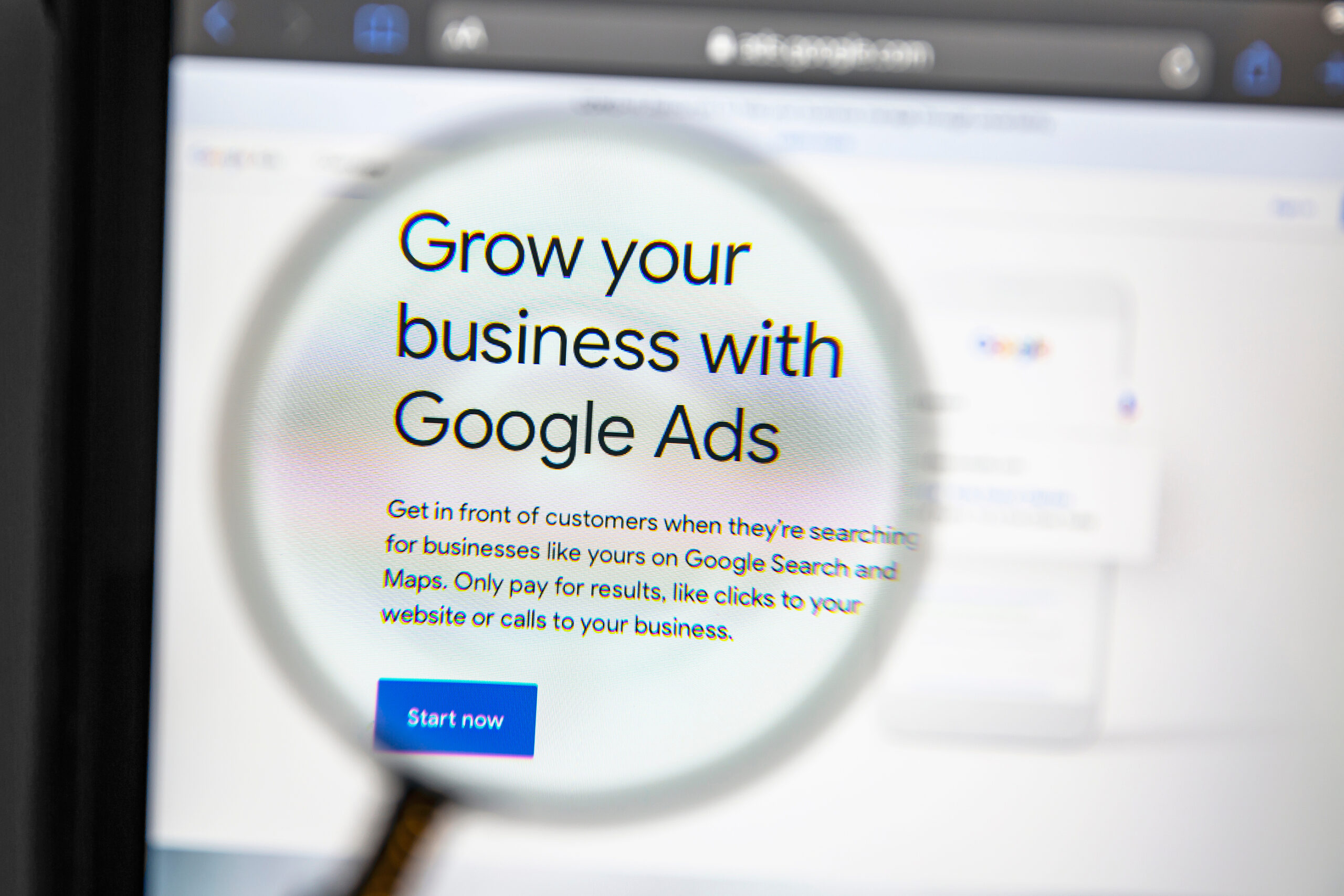
For mission-driven organizations, the year that lies ahead offers unprecedented opportunities and complex challenges. At the heart of these opportunities is the Google Ad Grant, a philanthropic initiative providing eligible 501(c)(3) nonprofits with up to $10,000 per month in in-kind search advertising.
However, as search engines evolve with Artificial Intelligence and Search Generative Experience (SGE), simply “having” the grant is no longer enough. To truly amplify your impact, you must navigate strict compliance rules, leverage advanced AI-driven bidding, and align your messaging with the specific intent of a modern audience.
At Dragonfly Digital Marketing, we specialize in helping organizations bridge the gap between their mission and their digital reach. This guide explores the essential strategies to maximize your Google Ad Grant in 2026, ensuring your $120,000 annual credit translates into real-world change.
Understanding the 2026 Google Ad Grant
In 2026, the Google Ad Grant remains one of the most powerful tools in a nonprofit’s toolkit, but the “barrier to entry” for performance has increased. With the sunsetting of traditional search formats and the rise of AI-integrated search results, nonprofits are now competing not just with other charities, but with the evolving way users consume information.
What’s changed?
- The Rise of SGE: Google’s Search Generative Experience often provides direct answers at the top of the page. Your ads must now target “conversational” queries and long-tail phrases that AI summaries might miss.
- AI-First Management: Manual bidding is largely a thing of the past. Success in 2026 relies on feeding Google’s machine-learning algorithms high-quality conversion data.
- Performance Max (PMax): Once reserved for paid accounts, PMax-style features are becoming integrated into the Grant environment, allowing for broader reach across the Search Network.
Navigating the “Non-Negotiable” Compliance Rules
Google is strict about how Grant funds are used. Failure to meet these requirements for two consecutive months can lead to account suspension. To maximize your grant, you must first ensure your foundation is rock-solid.
The 5% CTR Rule
Your account must maintain an overall Click-Through Rate (CTR) of at least 5%. In a world where the average search CTR is often lower, this requires highly relevant ad copy and precise keyword targeting. If your CTR drops, you must aggressively prune low-performing keywords.
Keyword Restrictions
Google prohibits “overly generic” keywords. You cannot bid on terms like “free videos,” “today’s news,” or single-word keywords (except for your brand name or specific medical conditions). In 2026, the focus is on intent. Instead of targeting “charity,” you should target “how to donate to local food banks in [City].”
Conversion Tracking (GA4)
In 2026, “shallow” conversions (like time on site) are no longer sufficient. You must track meaningful actions, such as:
- Completed donation forms.
- Newsletter sign-ups.
- Volunteer application submissions.
- Event registrations.
Without valid conversion tracking, you cannot use “Smart Bidding,” which is the only way to bypass Google’s standard bid limits. For organizations struggling with these technical hurdles, professional nonprofit marketing services can ensure your tracking is compliant and data-rich.
Advanced Strategy: Bidding Beyond the $2 Cap
Historically, Google Ad Grant accounts were capped at a maximum bid of $2.00 per click. In highly competitive sectors, like “homeless shelters” or “cancer research,” a $2.00 bid often isn’t enough to get your ad on the first page.
The Smart Bidding Loophole
The secret to maximizing your $10,000 monthly spend in 2026 is using Conversion-Based Smart Bidding (such as Maximize Conversions or Target CPA). When you use these strategies, Google removes the $2.00 cap, allowing your ads to compete for high-value keywords that would otherwise be out of reach.
By leveraging machine learning, Google calculates the “likelihood of conversion” for every single auction. If a user is highly likely to donate, Google may bid $10 or even $20 on your behalf to secure that top spot, using your grant funds more effectively.
Embracing AI: Performance Max and Broad Match
2026 has seen a shift toward “keyword-less” or “keyword-light” advertising. For nonprofits, this means moving away from exhaustive lists of hundreds of keywords and toward Broad Match combined with Smart Bidding.
Why Broad Match Works Now
In the past, Broad Match was a “budget burner.” Today, when paired with strong negative keyword lists and Smart Bidding, Broad Match allows Google to find users based on their intent rather than just the words they type. This is essential for capturing traffic from new search behaviors influenced by AI assistants and voice search.
Examples of Intent-Based Broad Match in 2026:
- Seed Keyword: Environmental volunteer opportunities
- User Query: “Hey Siri, where can I pick up trash in Portland this Saturday with a group?”
- Why it works: Google’s AI understands the intent of the conversational query and matches it to your “volunteer opportunities” theme, even though the words “trash” and “pick up” weren’t in your keyword list.
- Seed Keyword: Literacy charity
- User Query: “Best place to donate used children’s books near the 21201 zip code.”
- Why it works: Broad match identifies that “donating books” is a core conversion action for a “literacy charity,” bypassing the need for you to guess every possible way a user might phrase that request.
- Seed Keyword: Animal rescue support
- User Query: “How can I help stray cats in my neighborhood if I can’t adopt?”
- Why it works: The system recognizes the user is looking for “support” (volunteering, donating, or fostering) and serves your ad even though the query is highly specific and conversational.
- Seed Keyword: Nonprofit digital marketing
- User Query: “Who are the top experts for nonprofit SEO and Google Grant management in 2026?”
- Why it works: The algorithm recognizes the intent to hire a specialist agency, matching the user to expert services that provide the solution they are looking for.
Performance Max for Nonprofits
Performance Max (PMax) campaigns are now a cornerstone for many Grant recipients. These campaigns use AI to serve ads across Google’s Search network to audiences most likely to engage with your mission. A major benefit in 2026 is that PMax campaigns are often exempt from the 5% CTR requirement, making them an excellent “safety net” for accounts struggling with compliance.
Examples of Performance Max Success:
- The “Local Impact” Campaign: A community museum uses PMax to target users searching for “things to do with kids this weekend.” By enabling location assets, their ad appears at the top of Google Maps search results, driving physical foot traffic and ticket sales.
- The “Emergency Relief” Drive: An international aid organization uses PMax to quickly mobilize support during a crisis. The AI identifies users who have previously searched for disaster relief or humanitarian causes and shows them high-urgency ads, maximizing donation conversions.
- The “Volunteer Recruitment” Engine: A nonprofit focused on senior care uses PMax to find potential volunteers. By providing “audience signals” (like a list of current donors or common interests), the campaign identifies retirees in the local area who are browsing for community engagement opportunities.
- The “Zero-Click” Alternative: When SGE answers a general question about a cause, PMax places your ad for specific “Next Step” queries, like “Sign up for [Topic] updates,” ensuring you capture the user who wants to go deeper than the AI summary.
Content is King: The Role of Landing Pages
An ad is only as good as the page it sends people to. In 2026, Google’s “Landing Page Experience” score is a massive factor in your Quality Score. If your website is slow, confusing, or not mobile-optimized, you will pay more for every click, or worse; Google will stop showing your ads entirely.
Essential Landing Page Elements:
- Speed: 53% of mobile users abandon sites that take longer than three seconds to load.
- Clarity: The user should know exactly what to do within five seconds of landing.
- Mobile-First Design: With over 60% of searches happening on mobile, your donation and sign-up forms must be thumb-friendly.
- HTTPS Security: Google requires all Grant recipients to have a secure website (SSL certificate).
High-quality landing pages don’t just satisfy Google; they convert visitors. If your goal is to turn “clicks into donors,” your landing page must tell a compelling story and offer a frictionless path to action.
Integrating Paid Ads with Organic Strategy
The Google Ad Grant should not exist in a vacuum. The most successful nonprofits in 2026 use a “Hybrid Strategy.”
While the Grant provides $10,000 for search ads, it does have limitations (no remarketing, no image ads, no YouTube ads). To fill these gaps, many organizations run a small paid Google Ads account alongside their Grant.
The “Squeeze Play” Strategy:
- The Grant: Use the free $10k to target broad, educational, and awareness-based keywords (e.g., “how to help climate change”).
- The Paid Account: Use a small budget (e.g., $500/month) for Remarketing. This allows you to show ads to people who visited your site via the Grant but didn’t donate yet, following them across YouTube and the Display Network.
- SEO: Use the data from your highest-converting Grant keywords to inform your blog and website content strategy, ensuring you eventually rank for those terms for free.
Common Pitfalls: Why Grant Accounts Fail
Many nonprofits lose their grants not because of a lack of effort, but because of “set it and forget it” syndrome. In 2026, the following mistakes are common:
- Ignoring Negative Keywords: If you don’t exclude irrelevant terms, you’ll attract “junk” traffic that lowers your CTR and wastes your daily budget.
- Poor Account Structure: Google requires at least two ad groups per campaign and at least two sitelink extensions. Accounts that don’t meet these structural requirements are frequently flagged.
- Losing Nonprofit Status: Ensure your TechSoup validation and 501(c)(3) documentation are always up to date.
- Failing the Annual Survey: Google requires all Grantees to respond to an annual program survey. Missing this one email can result in account deactivation.
Why Professional Management is the 2026 Standard
The complexity of modern digital marketing means that “the volunteer who knows computers” is often not equipped to handle a $120,000-a-year advertising budget. Professional management ensures that you never miss a compliance deadline, your bidding strategies are optimized for the highest ROI, and your messaging stays ahead of search engine algorithm changes.
At Dragonfly Digital Marketing, we treat your Grant like real money. We focus on the metrics that matter: not just impressions, but the number of lives changed and dollars raised through your digital presence.
Conclusion: Turning Potential into Progress
The Google Ad Grant is more than just a “freebie.” It is a catalyst for growth. In 2026, maximizing this resource requires a blend of technical expertise, creative storytelling, and an embrace of AI-driven tools. By focusing on high-intent keywords, maintaining strict compliance, and optimizing your landing pages for the modern user, you can ensure that your organization doesn’t just survive in the digital age, but thrives.
Ready to unlock the full potential of your $10,000 monthly grant? Whether you need a full account audit or a comprehensive nonprofit marketing strategy, Dragonfly Digital Marketing is here to help you scale your impact. Contact us today to learn more and get started.
